Musk vs. Altman: Tech CEOs head to court Monday over fate of OpenAI
The former OpenAI business partners are embroiled in a high-stakes dispute over the future of one of the world's top AI companies.
Full article excerpt tap to expand
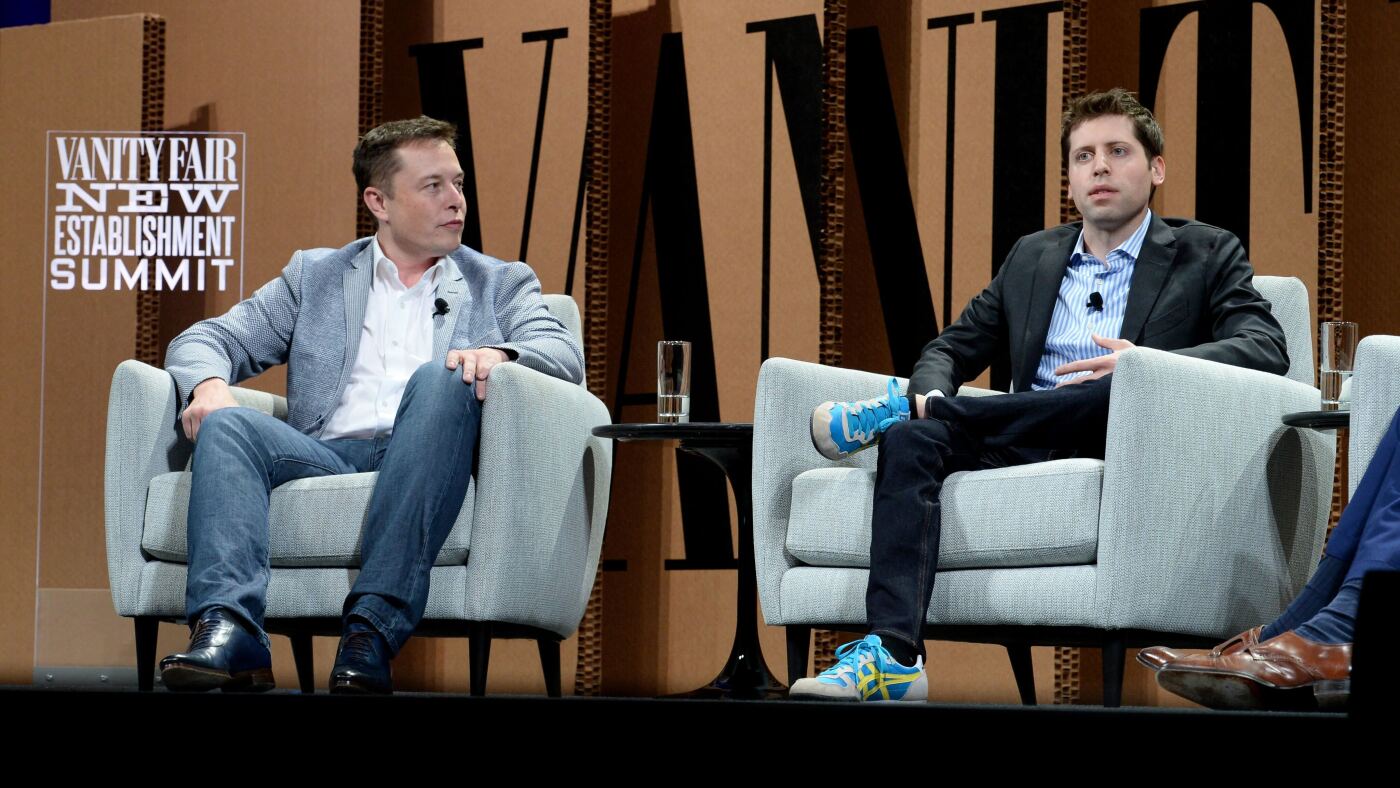
Business Musk vs. Altman: Tech CEOs head to court over the fate of OpenAI April 27, 20265:00 AM ET Heard on Morning Edition John Ruwitch Musk vs. Altman: Tech CEOs head to court over fate of OpenAI Listen · 3:14 3:14 Transcript Toggle more options Download Embed Embed <iframe src="https://www.npr.org/player/embed/nx-s1-5795661/nx-s1-9745945" width="100%" height="290" frameborder="0" scrolling="no" title="NPR embedded audio player"> Transcript Elon Musk and Sam Altman speak at the Vanity Fair New Establishment Summit at Yerba Buena Center for the Arts on Oct. 6, 2015, in San Francisco. Michael Kovac/Getty Images for Vanity Fair hide caption toggle caption Michael Kovac/Getty Images for Vanity Fair Two titans of the tech world will face off in court starting on Monday. Elon Musk, of Tesla and SpaceX, is suing Sam Altman, the CEO of OpenAI, in a high-stakes clash between former partners over the future of one of the world's most influential AI companies. Musk alleges he was duped when Altman transformed OpenAI from a nonprofit entity into a for-profit juggernaut. Thanks to the viral success of ChatGPT, the company now has a valuation approaching $1 trillion and is angling for a stock listing. "This is a clash of two enormous personalities in Elon Musk and Sam Altman," said Casey Newton, a longtime tech journalist and founder of the tech newsletter Platformer. "And I think what is at stake is potentially the future of OpenAI and the future development of all AI." Sponsor Message Books Journalist Karen Hao discusses her book 'Empire of AI' OpenAI was established in 2015 by Musk, Altman and a handful of others as a charity that aimed to create artificial intelligence "to benefit humanity," free from the pressures of shareholders and profit considerations. But according to statements OpenAI has posted online, the founders concluded early on that in order to raise enough money to access the computing power and chips necessary to build world-class AI, they had to attract investors with deep pockets — and the best way to do that was by creating a for-profit company. Analysts say Altman and Musk tussled over who would lead the company, and Musk lost. He left OpenAI's board in 2018; the company cited potential future conflicts with Tesla. In 2023, Musk launched his own AI company, called xAI. In the lawsuit that kicks off on Monday, Musk contends that Altman and others running OpenAI broke the law when the company morphed into a for-profit concern. (Technically, the for-profit company, established in 2019, is a subsidiary of the nonprofit OpenAI Foundation, but it eclipses the charity.) "The perfidy and deceit are of Shakespearean proportions," Musk's lawyers wrote in a court filing, adding that Altman had been engaged in a "long con." OpenAI contends that Musk was well aware that the company needed to become a for-profit, and was part of discussions about it. Sponsor Message Now, Musk is asking for billions of dollars made by the for-profit business to be "disgorged" from Altman and others — equity and money that was made on the back of what Musk argues was an illegal corporate conversion. Musk wants the court to order those gains to be returned to the part of OpenAI that's still not-for-profit. Business Tesla shareholders approve Elon Musk's trillion-dollar pay package Musk's filings also indicate that he will seek an order "unwinding the for-profit conversion … [and] restoring OpenAI to the role of a bona fide public charity." He is also…
This excerpt is published under fair use for community discussion. Read the full article at NPR Topics: News.
Discussion
0 commentsMore from NPR Topics: News