
Lisa's Copy (and Cut, and Paste)
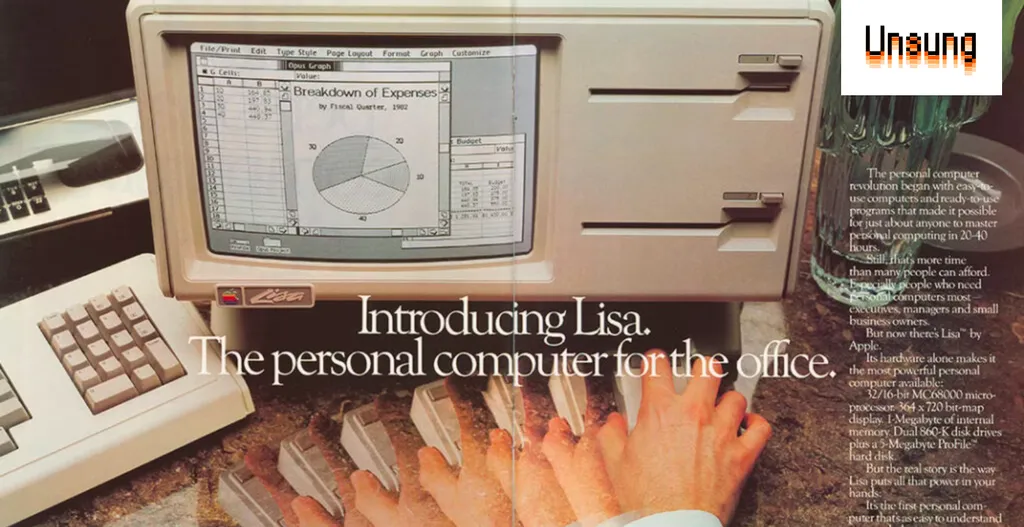
The article explores the origins and user interface of the Apple Lisa, the first graphical user interface linked to modern systems. Despite its failure and high cost, the Lisa introduced several office applications and unique UI strings that differ from today's conventions. The author reflects on how the evolution of language in technology has led to more concise terminology over time.
- ▪The Apple Lisa was released in 1983 as a predecessor to the Mac and featured a graphical user interface.
- ▪Despite its innovative design, the Lisa was considered a commercial failure and was abandoned by 1985.
- ▪The Lisa included seven office applications, each with unique names, and introduced various menu options that have evolved into today's terminology.
Opening excerpt (first ~120 words) tap to expand
Lisa’s copy (and cut, and paste) I love looking at origins of obvious things, because of two things: They help me get unstuck. If you go far enough, you will find out that even the most ossified conventions that are older than you haven’t always been this way. They put me in the mood of “what of the things that feel normal today that deserve to feel dated, obsolete, or awkward?” I’ve been emulating the Apple Lisa recently, and I was struck by how many of its UI strings were slightly or wholly different than what we’re used to. It makes sense. Lisa came out in 1983 as Mac’s predecessor and really the first GUI that is directly linked to what we’re using today. Even though it borrowed things from work done at Xerox, tons of conventions were not established yet.
…
Excerpt limited to ~120 words for fair-use compliance. The full article is at Hacker News (Newest).
Discussion
0 commentsMore from Hacker News (Newest)


