Light-Propelled ‘Metajets’ Could Enable 20-Year Journey to Alpha Centauri, Study Suggests
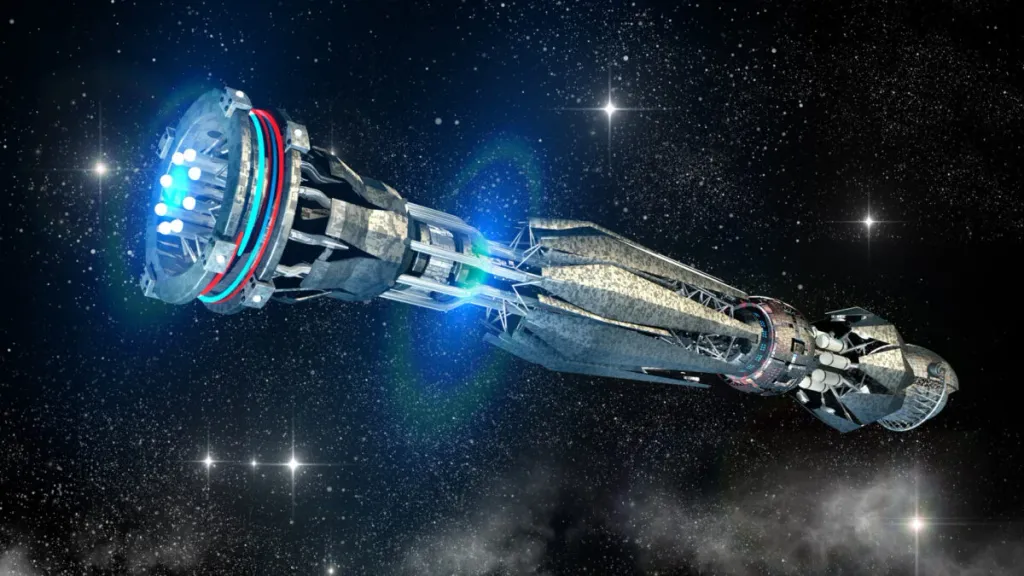
Researchers from Texas A&M University have developed a new propulsion method using light to potentially enable a 20-year journey to Alpha Centauri. The study focuses on tiny devices called metajets that can be controlled by laser beams, allowing for precise maneuverability in three dimensions. This innovative approach could lead to more sustainable and efficient deep space travel compared to traditional rocket propulsion.
- ▪The new propulsion method utilizes laser beams to lift and steer tiny engineered devices called metajets.
- ▪Metajets are ultrathin materials smaller than a human hair, designed to control light behavior for propulsion.
- ▪The researchers believe this technology could scale up for larger spacecraft, potentially enabling a mission to Alpha Centauri in 20 years.
Opening excerpt (first ~120 words) tap to expand
Humanity’s desire to explore deep space continues to inspire new ways to reach places far from home. Using conventional rocket propulsion, traveling to our nearest stellar neighbor, Alpha Centauri, would take thousands of years. Instead, researchers are looking to light as a faster, cheaper, and more sustainable form of propulsion that could enable deep space travel.cnx.cmd.push(function(){cnx({"playerId":"92b7b46b-43ed-4e0e-b21b-2c999302d9d7","settings":{"advertising":{"macros":{"AD_UNIT":"/23178111854/od.gizmodo.com/article","CHILD_UNIT":"article","POST_ID":"2000751691","POST_TYPE":"post","CHANNEL":"science","SECTION":"space","SUBSECTION":"","CATEGORIES":"space","TAGS":"in-space-propulsion,rocket-propulsion,space-travel","NOP":"0"},"timeBeforeFirstAd":0}}}).render("cnx-player-main")});…
Excerpt limited to ~120 words for fair-use compliance. The full article is at Gizmodo.
Discussion
0 commentsMore from Gizmodo