Jupiter’s Largest Moon Has a Rare Magnetic Field. A Strange Theory May Explain It
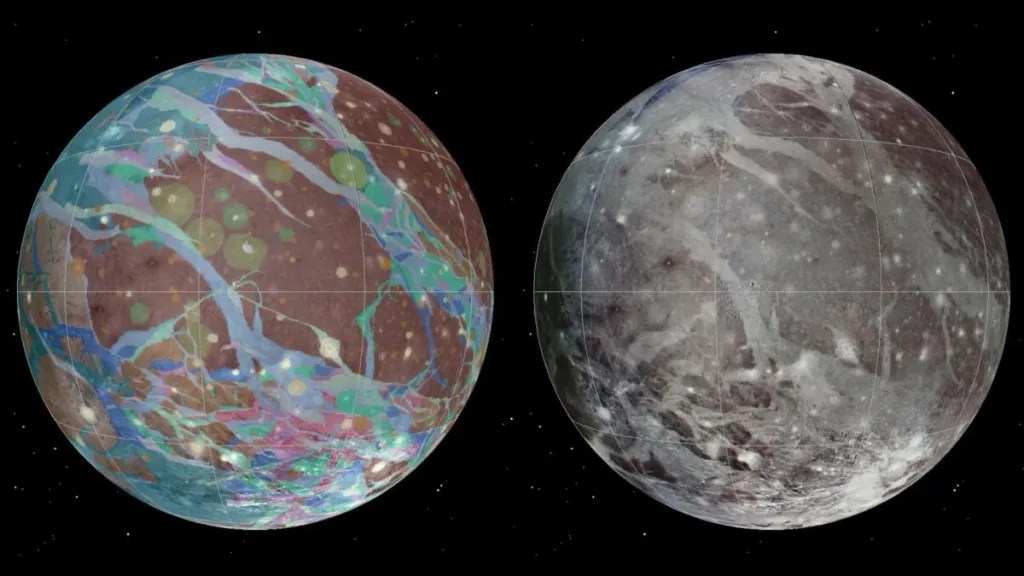
Ganymede, Jupiter's largest moon, is unique for generating its own magnetic field. Recent research suggests that its metallic core is still forming, challenging previous theories about its origin. This new understanding raises questions about the differences between Ganymede and other similar moons.
- ▪Ganymede is the only moon known to generate its own magnetic field.
- ▪Recent research indicates that Ganymede's metallic core is still forming, contrary to previous beliefs.
- ▪The study introduces a new mechanism for Ganymede's dynamo, suggesting it may not have started with a fully formed metal core.
Opening excerpt (first ~120 words) tap to expand
Jupiter, the biggest planet in our solar system, also hosts some of the biggest moons. That includes Ganymede, which happens to be the only moon known to generate its own magnetic field. After much speculation about why, one team believes it finally has the answer.cnx.cmd.push(function(){cnx({"playerId":"92b7b46b-43ed-4e0e-b21b-2c999302d9d7","settings":{"advertising":{"macros":{"AD_UNIT":"/23178111854/od.gizmodo.com/article","CHILD_UNIT":"article","POST_ID":"2000763463","POST_TYPE":"post","CHANNEL":"science","SECTION":"space","SUBSECTION":"","CATEGORIES":"space","TAGS":"europa-clipper,ganymede,jupiter,jupiter-icy-moons-explorer,planetary-science","NOP":"0"},"timeBeforeFirstAd":0}}}).render("cnx-player-main")}); Recent research published in Science Advances suggests that Ganymede’s…
Excerpt limited to ~120 words for fair-use compliance. The full article is at Gizmodo.
Discussion
0 commentsMore from Gizmodo