Is Alien Life Hiding in Plain Sight, Right Here in Our Solar System?
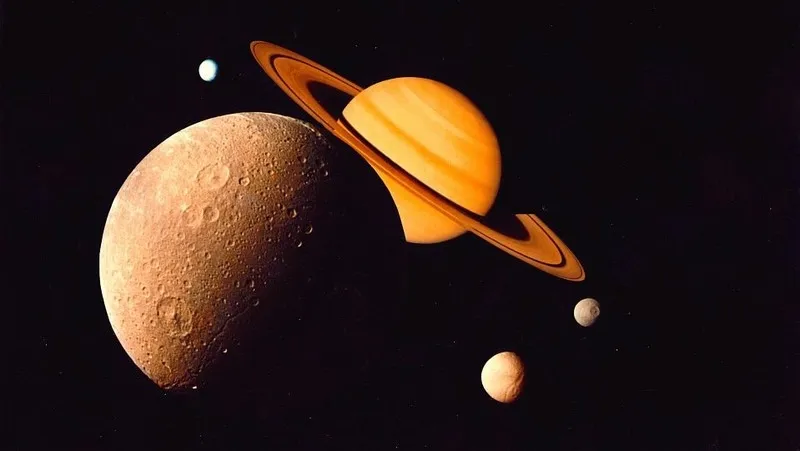
Saturn's moons, particularly Titan and Enceladus, have revealed surprising potential for supporting life. The Cassini mission provided extensive data, showing Titan's unique atmosphere and liquid methane lakes. These findings challenge previous notions about where life could exist in our solar system.
- ▪Cassini spent thirteen years studying Saturn and its moons, revealing details about their environments.
- ▪Titan has a thick atmosphere and vast lakes of liquid methane, making it the most Earth-like celestial body discovered.
- ▪There may be a subsurface ocean of salty liquid water beneath Titan's icy crust.
Opening excerpt (first ~120 words) tap to expand
The grandeur of Saturn is stunning to behold when viewed through a telescope. Possibly the most iconic and easily identifiable member of our solar system, this “ringed planet” has a volume equivalent to 760 Earths and such astonishingly low density that the planet could even float on water. Until two decades ago, few missions had visited Saturn, although Pioneer 11 and the Voyager probes briefly flew by and gave us some stunning imagery and reconnaissance to identify particular areas of interest.Article continues after advertisement It wasn’t until 2004 that the dedicated space probe Cassini arrived at the planet.
…
Excerpt limited to ~120 words for fair-use compliance. The full article is at Literary Hub.
Discussion
0 commentsMore from Literary Hub