Inspect and filter every HTTP request leaving your microVM
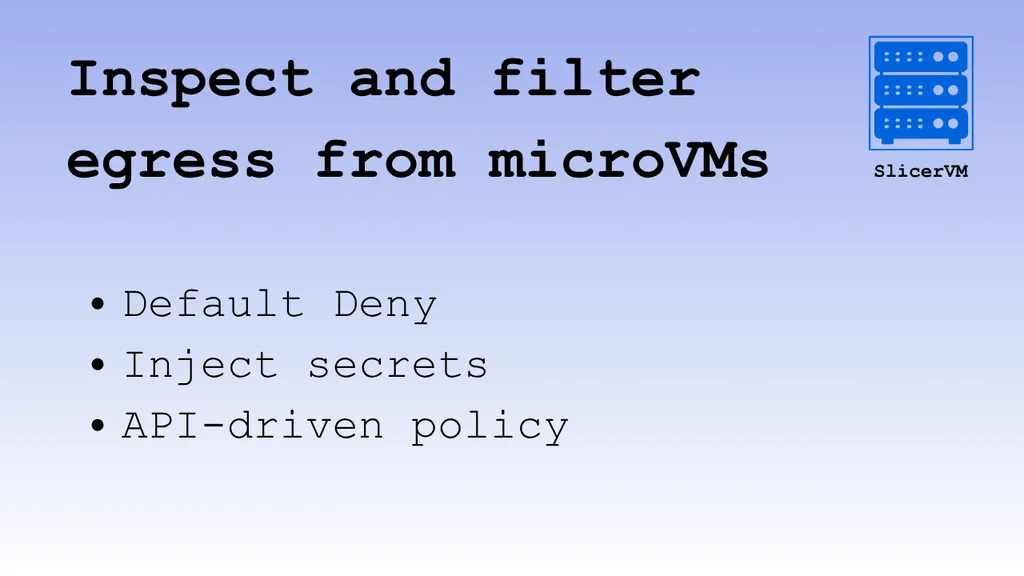
Slicer has introduced a new proxy feature that enables inspection and filtering of HTTP requests from microVMs, enhancing security by preventing secret leakage. The tool supports fine-grained egress rules, including secret injection, method and path allow-listing, and request rewriting. It can be used across various environments, from local development to AI agents and CI/CD workflows.
- ▪Slicer's proxy allows inspection and filtering of HTTP egress traffic from microVMs.
- ▪Secrets can be injected at the proxy level without exposing them to the workload.
- ▪Egress rules can be defined per-VM with support for method, path, and host restrictions.
- ▪The proxy integrates with SDKs in Go and TypeScript for automation.
- ▪Slicer builds on prior tools like OpenFaaS, Inlets, and actuated-egress for proven design.
Opening excerpt (first ~120 words) tap to expand
aiagentssandboxegresspolicyInspect and filter every HTTP request leaving your microVMSlicer's new proxy lets you inspect and filter HTTP requests egressing your microVM, and keep secrets away from workloads. Alex EllisMay 1, 2026Last week we introduced Slicer's Certificate Authority (CA) support - the foundation for inspecting and mutating egress traffic via a host-side proxy. This week: how to define fine-grained egress rules per-VM, including secret injection, path and method allow-listing, and request rewriting. Slicer can be used in multiple ways from hosting core infrastructure like web servers, Kubernetes, OpenFaaS, or CI runners in isolated microVMs, to running AI agents on your local Mac, to sandboxing automated tasks like agent-driven code reviews.
…
Excerpt limited to ~120 words for fair-use compliance. The full article is at SlicerVM.
Discussion
0 commentsMore from SlicerVM