Inside American artist Doug Aitken’s immersive new exhibition at NMACC, Mumbai
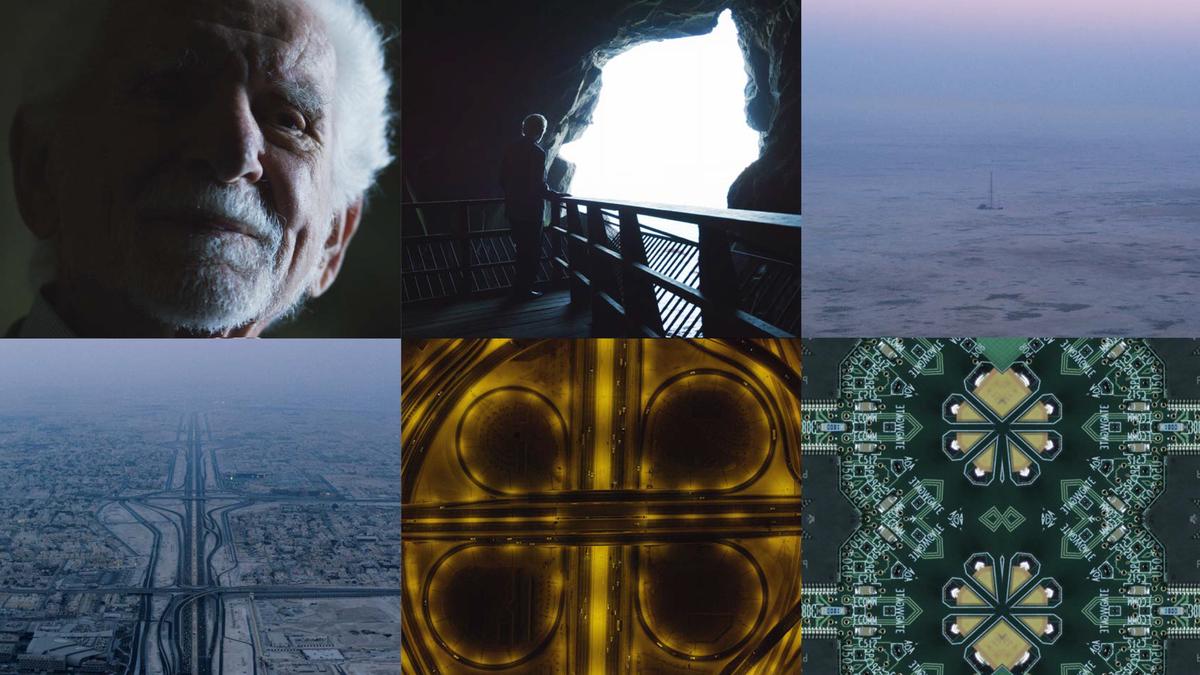
Doug Aitken's new exhibition at NMACC in Mumbai showcases his signature immersive style, emphasizing natural systems and sensory experiences. His work explores the interplay of light, sound, movement, and architecture to create environments that engage viewers dynamically. Rather than presenting static art, Aitken designs situations that encourage awareness of one's presence within evolving spatial rhythms.
- ▪Doug Aitken is known for his multidisciplinary approach, blending art, architecture, and nature.
- ▪His past projects include Mirage (2017), Station to Station (2013), and diamond sea (1997).
- ▪The exhibition at NMACC highlights how sensory elements influence human perception and behavior.
- ▪Aitken treats architecture as a living, responsive entity similar to natural landscapes.
- ▪His installations aim to immerse viewers in dynamic, evolving environments rather than deliver fixed messages.
Opening excerpt (first ~120 words) tap to expand
American multidisciplinary artist Doug Aitken has always been drawn to the quiet logic of natural systems — how light reshapes a landscape, how a river finds its own rhythm, how movement becomes a language all its own. You see this sensitivity across his practice: the mirrored house of Mirage (2017), shifting in and out of visibility with the desert sun; the roving cross-country experiment Station to Station (2013), which turned a train into a creative ecosystem; or diamond sea (1997), his early, contemplative gaze at Namibia’s mined terrain, where the landscape dictated the mood and the pace. Even in SONG 1 (2012), when the Hirshhorn Museum in Washington, D.C.
…
Excerpt limited to ~120 words for fair-use compliance. The full article is at The Hindu — Top.
Discussion
0 commentsMore from The Hindu — Top