How to Work and Compound with AI
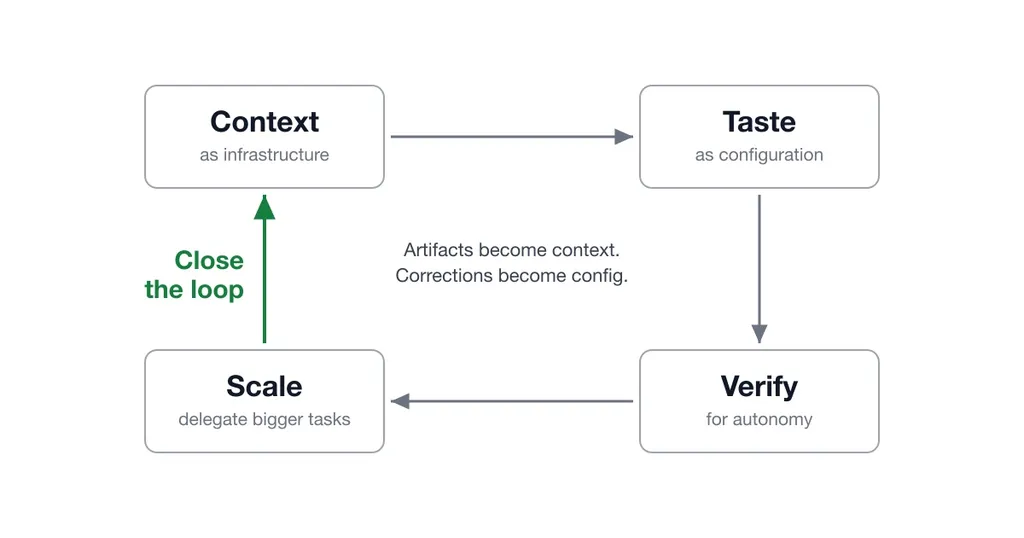
The article discusses effective ways to work with AI by establishing a structured workflow. It emphasizes the importance of providing context, organizing information, and adapting practices to improve collaboration with AI systems. Additionally, it highlights the need for a memory layer to retain important information across sessions.
- ▪Providing good context and organizing work can help AI models navigate and retrieve relevant information more efficiently.
- ▪Each new session with an AI model should be treated like onboarding a new team member, using structured documents to guide the process.
- ▪Creating a memory layer allows important facts and preferences to persist across sessions, enhancing the effectiveness of AI collaboration.
Opening excerpt (first ~120 words) tap to expand
How can we work effectively with AI? What’s the workflow, how does it scale, and how do we improve our systems over time? And ideally, it should compound. Every finished artifact—code, docs, analysis, decisions—becomes context for the next session. And each correction updates a config that reduces future errors. While I’m still learning, I’ve repeated my answers often enough that I’m writing it here so the next time I’m asked I can share a link instead. If you use AI regularly, you likely already apply many of these practices. Nonetheless, I believe the underlying principles apply broadly: provide good context, encode your taste as config, make verification easy, delegate bigger tasks, and close the loop. If a practice does not fit, adapt the principle and invent your own.
…
Excerpt limited to ~120 words for fair-use compliance. The full article is at eugeneyan.com.
Discussion
0 commentsMore from eugeneyan.com