How to watch Chonkers, the 2,000-pound sea lion live from San Francisco
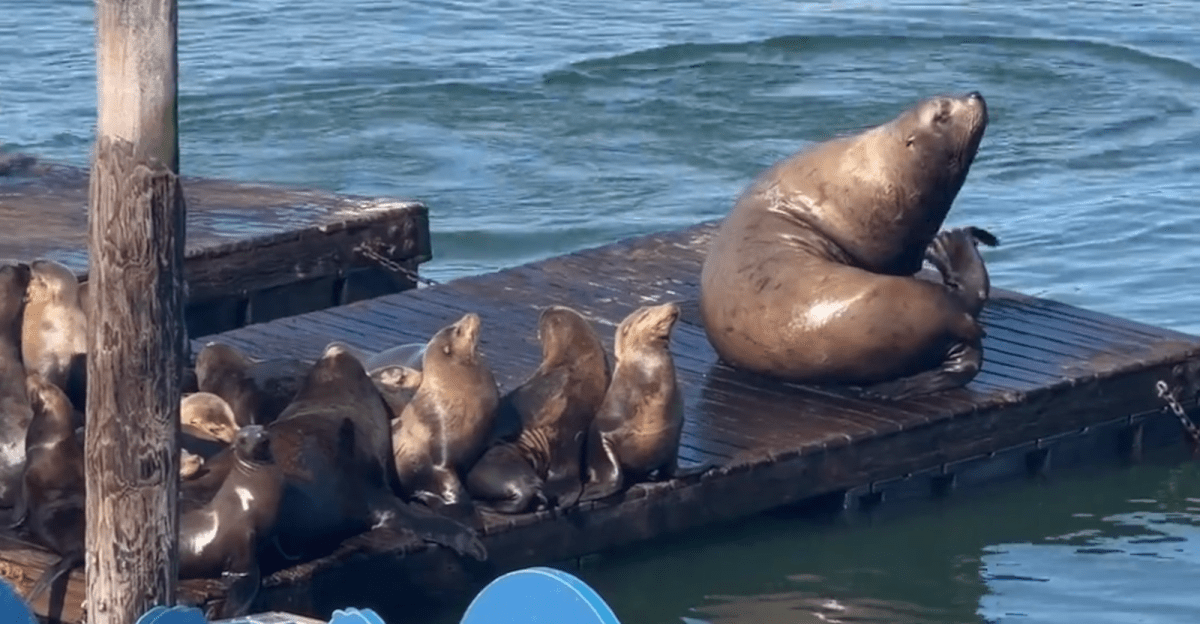
A 2,000-pound Steller sea lion named Chonkers has become a standout attraction among California sea lions at San Francisco’s Pier 39, and viewers can watch him live via the pier’s online livestream. Chonkers is larger and lighter in color than the smaller, darker California sea lions, and his species is more commonly found in northern waters. The livestream allows remote viewing, screenshot capture, and full-screen options for observing the animals’ haul-out behavior. Steller sea lions like Chonkers do not migrate traditionally but move in search of seasonal prey across the North Pacific.
Full article excerpt tap to expand
Spend your day watching Chonkers. Image: Pier 39 live cam via Reddit Get the Popular Science daily newsletter💡 Breakthroughs, discoveries, and DIY tips sent six days a week. Email address Sign up Thank you! Terms of Service and Privacy Policy. While an enormous sea lion named Chonkers makes a splash in San Francisco, you don’t have to live in the Golden City to sneak a peek. Viewers can watch the action from home with Pier 39’s livestream as this 2,000-pound Stellar sea lion (Eumetopias jubatus) cozies up with the smaller California sea lions (Zalophus californianus) that “haul-out” along the docks on Pier 39. To watch the Pier 39 livestream, scroll down to the bottom of the page until you see “VIEW THE SEA LIONS LIVE.” Then, press the “GO LIVE” button. You can also press “Control” to choose a position, snap a screenshot, pause the stream, or enter a full-screen mode. Pier 39 Sea Lion Webcam HDRelay.create({target: 'webcam_holder', id: 'CID_UROS0000008D'}); How to spot Chonkers Chonkers was first spotted at Pier 39 in early April. He has been flopping up onto the marina’s floats and hanging out with the California sea lions. While they can be seen in California waters, Stellar sea lions more commonly call Alaska and Washington State home, so Chonkers sticks out among his much smaller float-mates. His size is the first thing that will make him stand out for viewers. Stellar sea lions are about 10 times bigger than California sea lions. Male Stellar sea lions like Chonkers push 2,500 pounds and are 11 feet long, while male California sea lions weigh about 250 pounds and are seven feet long. The females are also bigger. Female Stellar sea lions weigh in at roughly 1,000 pounds and measure nine feet long, compared to 220 pounds and six feet for California sea lions. A Stellar sea lion (left) wearing a NOAA satellite transmitter. A California sea lion (right) wearing a similar tracker. Images: NOAA. Chonkers also has a light tan to reddish color compared to the California sea lions’s darker brown fur. Stellar sea lions have a more low-frequency vocalization that sounds like a roar, while California sea lions’ sound more like barks. California sea lions have a more pointed snout like a long-nosed dog, while Stellar sea lions like Chonkers typically have a more blunt face and a boxy, bear-like head. What is Chonkers doing on the dock? While watching, you’ll see both species “hauling out.” This means the seals and sea lions temporarily leave the water and lay on a rock, the beach, or a human-made structure like a dock. They may haul out after foraging for food or get some rest between migrations. Chonkers is a Steller sea lion amidst a sea of California sea lions. Screenshot: Pier 39 Live Cam via Reddit According to The Marine Mammal Center, hauling out also helps them regulate their body temperature, avoid hungry predators, molt or shed their fur, interact with other animals, mate, give birth, and nurse their pups. Chonkers and other Stellar sea lions do not migrate in the traditional sense. Instead, they will move from the center of their foraging activity, to follow seasonal concentrations of their many types of prey. These predatory animals consume over 100 species of fish, including salmon, Pacific cod, arrowtooth flounder, and rock sole. They also eat cephalopods, including squid and octopus. Steller sea lions have over 300 haul-out sites along the North Pacific rim from Japan and Russia to Alaska and the Channel Islands off California.…
This excerpt is published under fair use for community discussion. Read the full article at Popular Science.
Discussion
0 commentsMore from Popular Science