GOP Rep. Wesley Hunt Crushes the Dem Narrative on Media Question About SCOTUS VRA Decision
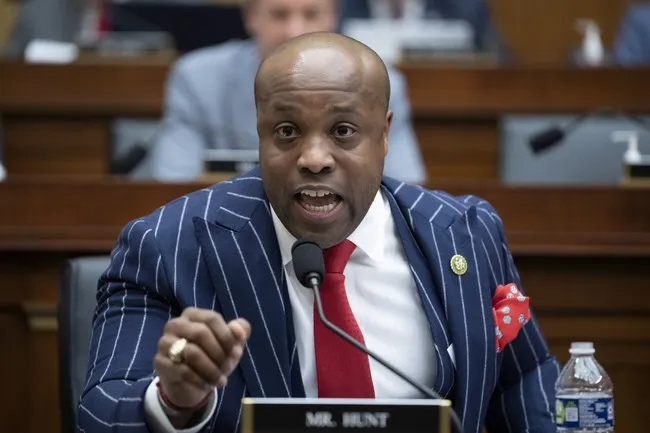
Republican Rep. Wesley Hunt responded to a media question about the potential absence of Black Republicans in Congress following the Supreme Court's decision in Louisiana v. Callais by emphasizing qualifications over race. He dismissed the focus on racial representation as irrelevant, stating he was elected based on merit and the will of his constituents. His remarks were praised by conservative commentators as a rejection of race-based political narratives.
- ▪The Supreme Court ruled in Louisiana v. Callais, a case concerning the Voting Rights Amendment, which may have broader implications for other states.
- ▪Democratic leaders including Hakeem Jeffries and Barack Obama criticized the ruling, calling it politically motivated.
- ▪Rep. Wesley Hunt (TX-38) rejected a media question about the lack of Black Republicans in Congress, calling it race-baiting and irrelevant.
- ▪Hunt emphasized that he represents a majority-white district and was elected based on qualifications, not race.
- ▪Conservative figures like Chip Roy praised Hunt's response as a strong rebuttal to identity politics.
Opening excerpt (first ~120 words) tap to expand
GOP Rep. Wesley Hunt Crushes the Dem Narrative on Media Question About SCOTUS VRA Decision By Nick Arama | 6:28 PM on April 30, 2026 The opinions expressed by contributors are their own and do not necessarily represent the views of RedState.com. AP Photo/J. Scott Applewhite As we reported, the Supreme Court made a big decision in the case of Louisiana v. Callais, dealing with the Voting Rights Amendment, on Wednesday. As we reported, the decision in that case may ultimately affect other states. Advertisement googletag.cmd.push(function () { googletag.display("div-gpt-300x250_2"); //googletag.pubads().refresh([gptAdSlot["div-gpt-300x250_2"]]) }); . READ MORE: Supreme Court Strikes Down Louisiana's Congressional Map in Major Voting Rights RulingThe Domino Effect: SCOTUS' Louisiana v.
…
Excerpt limited to ~120 words for fair-use compliance. The full article is at RedState.
Discussion
0 commentsMore from RedState