'Geek' hangout to tourist draw: Japan's maid cafes
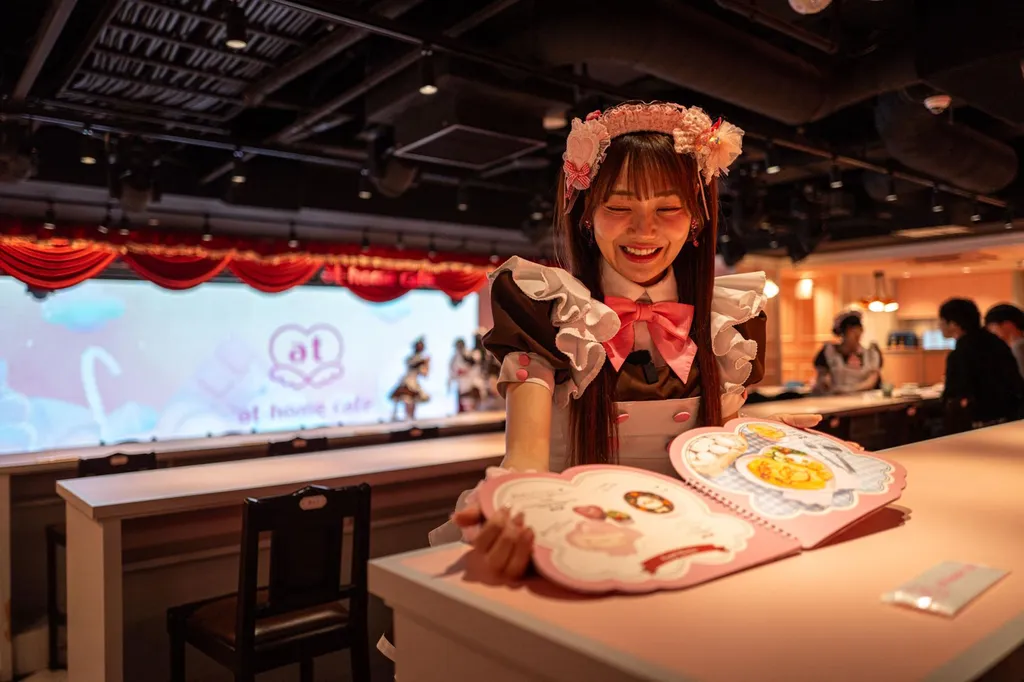
Maid cafes in Tokyo's Akihabara district, once niche subculture spots, have evolved into mainstream attractions drawing diverse customers including families, women, and international tourists. Staff emphasize the experience is innocent and family-friendly, focusing on playful interaction rather than titillation. While rooted in 'otaku' culture, these cafes now operate under strict rules to protect workers and maintain a safe environment.
- ▪Maid cafes originated in Akihabara in the early 2000s as part of Japan's 'otaku' subculture.
- ▪Hitomi, a maid at At-Home Cafe, has worked to combat prejudice about the profession for over two decades.
- ▪At-Home Cafe employs 650 maids across 13 locations and enforces rules such as no touching and no street promotions.
- ▪Women now make up 57 percent of registered customers at At-Home Cafe, according to the company.
- ▪French tourist Taha Hsine and Japanese customer Hazuki both noted the unexpected diversity of the clientele, including many women and foreign visitors.
Opening excerpt (first ~120 words) tap to expand
Hitomi explains the menu at a maid cafe in Akihabara district of Tokyo, March 3. AFP-YonhapTOKYO — "Master, mistress — welcome home!" exclaims the smiling young woman in a French maid's costume, as customers pass through the looking glass into a unique Japanese world with oodles of quirkiness, cuteness and cake.These "maid cafes" — inspired by the traditional maid outfit that has long been a motif in Japanese pop culture — have evolved from niche subculture hangouts 20 years ago into a mainstream attraction for people of all ages and genders.And staff working there insist that the experience is not in any way designed to titillate, saying it is meant to be a wholly innocent family-friendly experience."I've been fighting against prejudice for 22 years," Hitomi, a "maid" in Tokyo's…
Excerpt limited to ~120 words for fair-use compliance. The full article is at Korea Times.
Discussion
0 commentsMore from Korea Times