From Vibe Coding to AI-Assisted Engineering: Lessons from Real Projects
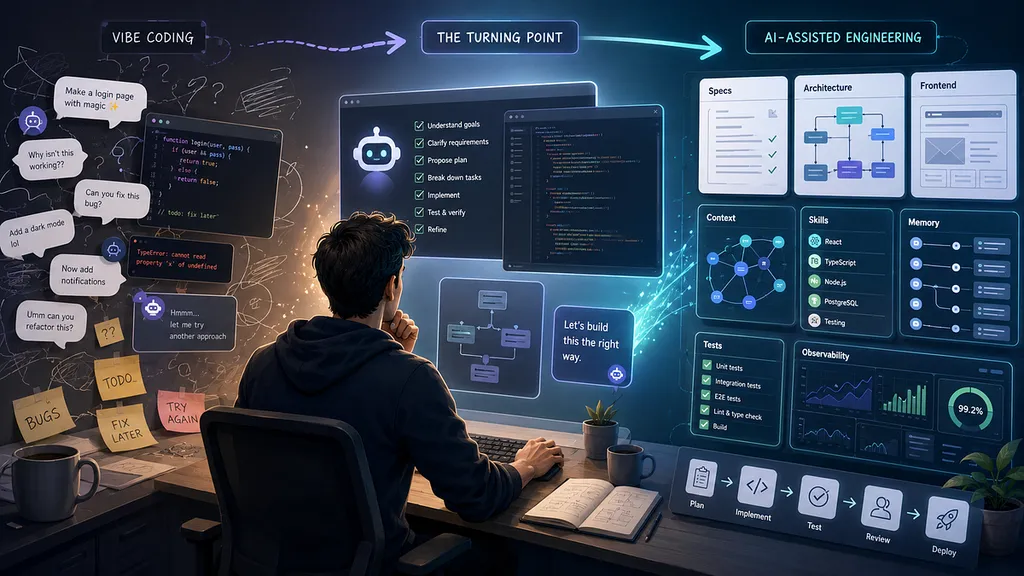
The article discusses the author's journey in integrating AI into software engineering workflows. It highlights the importance of building a robust engineering system around AI tools to enhance their effectiveness. Key lessons include the value of task refinement and the significance of creating detailed specifications before coding.
- ▪The author initially used AI tools like Copilot and Codex for coding tasks but found the results inconsistent.
- ▪A significant improvement was observed when the author utilized AI for task refinement before coding, leading to better planning and output.
- ▪The article emphasizes the transition from vague coding prompts to a more structured approach through Spec-Driven Development.
Opening excerpt (first ~120 words) tap to expand
From Vibe Coding to AI-Assisted Engineering: Lessons From Real ProjectsEriton Silva11 min read·4 hours ago--ListenShareHow I improved my AI coding workflow with specs, context, agent skills, frontend references, and memory.Press enter or click to view image in full sizeLike many developers, I have incorporated AI into my daily software engineering routine.I use AI across different parts of the software development lifecycle: refinement, architecture, infrastructure, quality, troubleshooting, observability, monitoring, documentation, and even product thinking.At first, my approach was simple: I opened Copilot, Codex, Devin, or another AI coding assistant and asked it to fix a bug, create a feature, explain a piece of code, or generate an endpoint.It worked.But it was inconsistent.Sometimes…
Excerpt limited to ~120 words for fair-use compliance. The full article is at Medium.
Discussion
0 commentsMore from Medium