DIY Potentiometer is a Great Teaching Aid
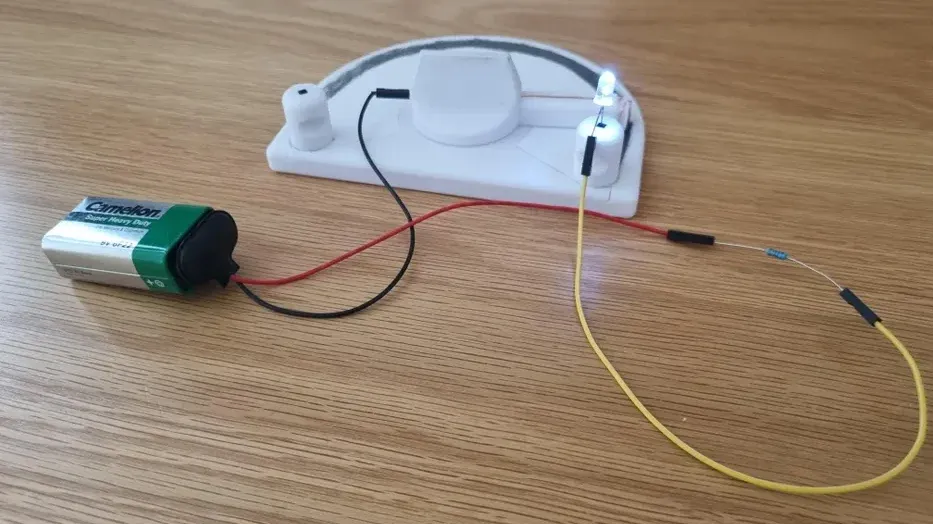
A DIY potentiometer serves as an effective educational tool for teaching electronics. It features a simple design with a 3D printed base and a resistive paper track covered in graphite. This hands-on approach allows learners to visually understand how a potentiometer functions within a circuit.
- ▪The DIY potentiometer is built with a 3D printed base and knob.
- ▪A paper track acts as the main resistive element, covered with graphite.
- ▪This teaching aid provides an intuitive understanding of resistance variation in circuits.
Opening excerpt (first ~120 words) tap to expand
DIY Potentiometer Is A Great Teaching Aid No comments by: Zoe Skyforest May 20, 2026 Title: Copy Short Link: Copy A potentiometer is a simple electrical device that allows resistance to be varied at will. Most everyone in the electronics field is intimately familiar with how they work on a fundamental level. Of course, we all had to be taught once, though, and a great way to do that would be with a teaching tool like the one [DiscoLapy] built. What you’re looking at here is a very simple potentiometer that bares its function for all to see. It consists of a 3D printed base and knob, which form the mechanical part of the device. A paper track is then laid on top to act as the main resistive element, once properly covered with graphite from a regular old pencil.
…
Excerpt limited to ~120 words for fair-use compliance. The full article is at Hackaday.
Discussion
0 commentsMore from Hackaday