Deadly Israeli attacks worsen Gaza’s water shortage crisis
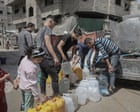
Israeli attacks in Gaza have killed a water engineer and two Unicef water truck drivers, worsening an already severe clean water shortage that is fueling disease outbreaks. Destruction of water infrastructure, combined with restrictions on fuel, spare parts, and hygiene supplies, has limited daily water access to far below minimum humanitarian standards. Overcrowded shelters and failing sanitation systems are creating public health emergencies, with preventable illnesses spreading rapidly. The UN and aid groups warn the situation is deteriorating, especially as summer temperatures rise.
Full article excerpt tap to expand
People in Gaza City’s Sheikh Radwan neighbourhood collect water from tanker trucks this month. Photograph: Anadolu/Getty ImagesView image in fullscreenPeople in Gaza City’s Sheikh Radwan neighbourhood collect water from tanker trucks this month. Photograph: Anadolu/Getty ImagesGazaDeadly Israeli attacks worsen Gaza’s water shortage crisisEngineer and two drivers killed in recent weeks as scarcity of clean water fuels spread of preventable diseasesSeham Tantesh in Gaza, Lorenzo Tondo and Emma Graham-Harrison in JerusalemMon 27 Apr 2026 00.00 EDTSharePrefer the Guardian on GoogleIsraeli forces in Gaza killed a water engineer and two drivers who transported water to displaced families over four days in mid-April, exacerbating severe shortages of clean water that are fuelling the spread of preventable disease.Israeli limits on the shipment of soap, washing powder and other hygiene products into Gaza have also forced prices up, adding to the challenge of keeping clean and avoiding infection in overcrowded shelters and tent encampments.Over more than two and a half years of war, Israeli attacks have destroyed most of Gaza’s civilian infrastructure, including networks that provided clean water and removed and treated sewage. They have also repeatedly killed Palestinian civilians trying to maintain or restore them.‘‘Since the beginning of the war, we have lost about 19 workers from water facilities who were carrying out repair and distribution work,” said Omar Shatat, the deputy director of Gaza’s coastal municipalities water utility. “Targeting has become part of the operational reality.’’The most recent attack was a strike on al-Zein well in northern Gaza last Monday, when water engineers were working inside.The attack killed one, injured four and caused extensive structural damage to “a critical water source serving the surrounding population”, according to an incident report seen by the Guardian. The document warned that the disruption to water supplies would affect thousands of people.Four days earlier, Israeli forces shot dead two drivers working for Unicef, the UN agency for children, at the main water collection point for northern Gaza. Two others were injured in the attack, which Unicef said threatened the humanitarian networks bringing clean water to hundreds of thousands of people in Gaza.The UN has recognised access to clean water as a basic right, setting a standard of 50 to 100 litres daily per person except in emergency situations.Across Gaza, the average daily supply is only 7 litres of drinking water and 16 litres of domestic water, Unicef said, and many people do not have access to even the minimum 6 litres a day of clean drinking water.The price of soap and other cleaning supplies has doubled over the last month. Scarcity and high demand have created a “major crisis”, said Anwar al-Maghribi, who has a shop at a market in Deir al-Balah.“A 7kg pack of laundry detergent has risen from 50 shekels to 100 shekels or more, and other cleaning products have also seen similar increases,” he said.View image in fullscreenA girl fills a container with water at a makeshift camp for displaced people in Khan Younis. Photograph: Bashar Taleb/AFP/Getty ImagesLaureline Lasserre, Médecins Sans Frontières’ emergency humanitarian affairs manager for Gaza, said people were getting sick because they could not access clean water and basic sanitation.“No clean water, no soap, overcrowded living conditions; this is the root cause of a huge proportion…
This excerpt is published under fair use for community discussion. Read the full article at the Guardian.
Discussion
0 commentsMore from the Guardian