Daunian kyathos: A 2,700-year-old ceramic cup from Italy decorated with an exuberant-looking, bug-eyed fellow
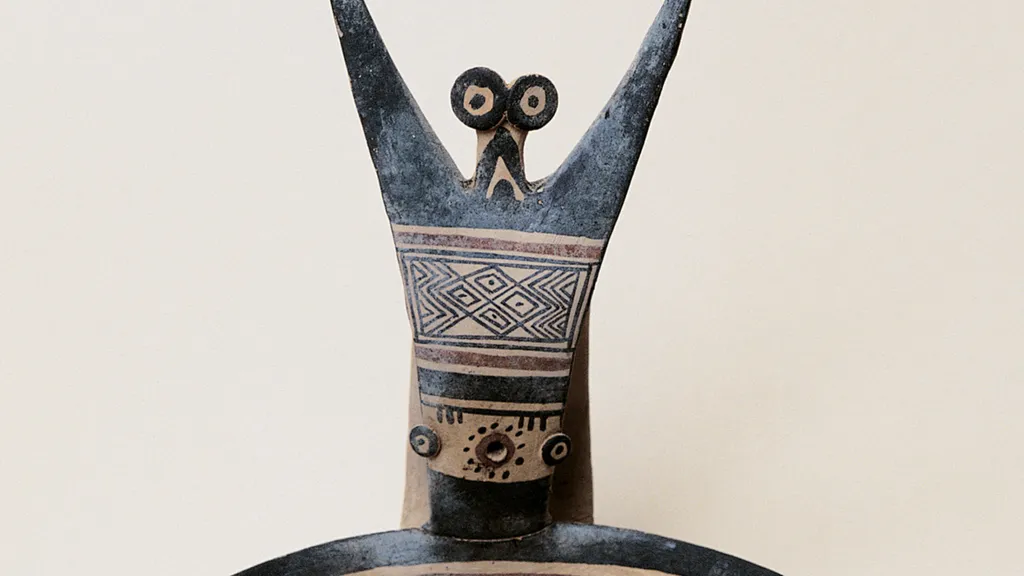
A 2,700-year-old ceramic cup known as the Daunian kyathos has been discovered in southern Italy. This unique piece of pottery, possibly used as a wine ladle, features a human figure as its handle and is decorated with geometric designs. The Daunians, who occupied the region before Roman conquest, left behind few records, making such artifacts crucial for understanding their culture.
- ▪The Daunian kyathos is a painted, one-handled ceramic cup or ladle from the sixth century B.C.
- ▪It was found in the ancient city of Herdonia, located in present-day Foggia, Italy.
- ▪The vessel may have served as a wine ladle or been used in religious contexts, possibly involving opium mixtures.
Opening excerpt (first ~120 words) tap to expand
Archaeology Daunian kyathos: A 2,700-year-old ceramic cup from Italy decorated with an exuberant-looking, bug-eyed fellow A pre-Roman ceramic cup or ladle that could inspire kitchenware today — this li'l dude is excited to mix! By Kristina Killgrove published 18 May 2026 in Features When you purchase through links on our site, we may earn an affiliate commission. Here’s how it works. Copy link Facebook X Reddit Pinterest Flipboard Share this article 0 Join the conversation Follow us Add us as a preferred source on Google Newsletter Subscribe to our newsletter An ancient ceramic vessel, possibly a wine ladle, from southern Italy.(Image credit: Getty Images)QUICK FACTSName: Daunian kyathosWhat it is: A painted, one-handled ceramic cup or ladleWhere it is from: Foggia, ItalyWhen it was made:…
Excerpt limited to ~120 words for fair-use compliance. The full article is at Live Science.
Discussion
0 commentsMore from Live Science