Cosmic Dust Around Young Stars Could Reveal How to Weigh Newborn Planets
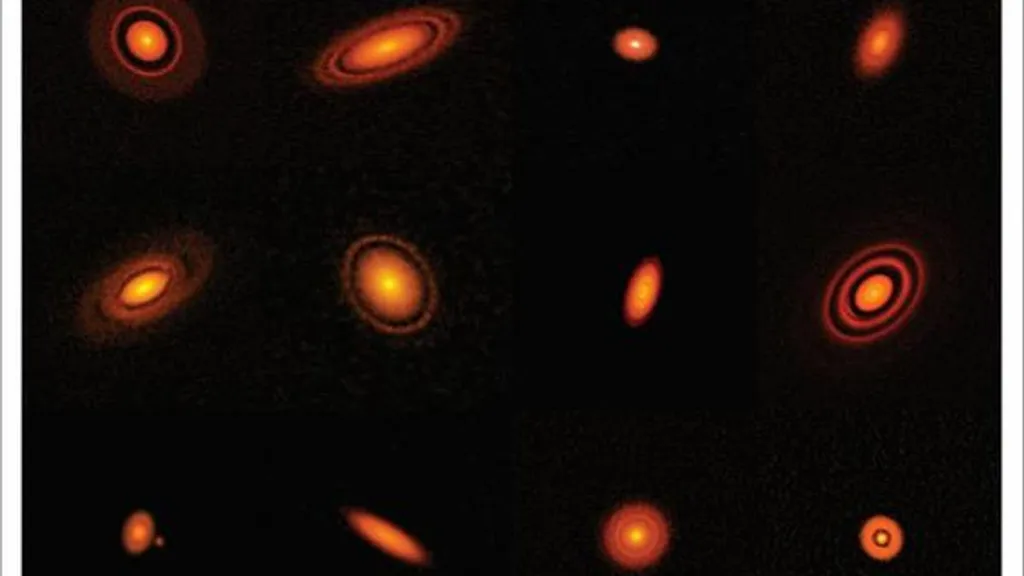
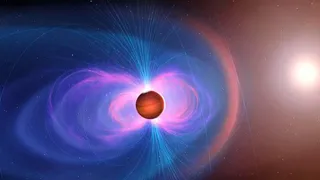
Astronomers have developed a method to estimate the mass of newborn planets using cosmic dust surrounding young stars. This technique utilizes the characteristics of dust rings to infer planetary masses, providing a new way to study protoplanetary disks. The findings have been validated through observations of the PDS 70 star system and could enhance our understanding of planetary formation.
- ▪Researchers from the University of Warwick, MIT, and McMaster University have created a method to estimate the mass of newborn planets using cosmic dust.
- ▪The study reveals that the width and brightness of dust rings can indicate the mass of planets within protoplanetary disks.
- ▪The method has been successfully applied to the PDS 70 star system, confirming its effectiveness in real observations.
Opening excerpt (first ~120 words) tap to expand
Astronomers may have figured out a way to weigh newborn planets in other solar systems, not with a scale, but with dust. Surrounding young stars are often swirls of cosmic dust and gases that create the perfect conditions for new planets to form. Peering through those cosmic materials isn’t always easy, and even advanced telescopes can struggle to capture images of what dwells within the cosmic dust. While astronomers can pick up clues about possible planets orbiting these new stars, it is still difficult to interpret what those clues may be, until now. Researchers from the University of Warwick, MIT, and McMaster University may have developed a new method to estimate the mass of some newborn planets.
…
Excerpt limited to ~120 words for fair-use compliance. The full article is at Discover Magazine.
Discussion
0 commentsMore from Discover Magazine