Bangladesh’s paramilitary problem cannot be rebranded
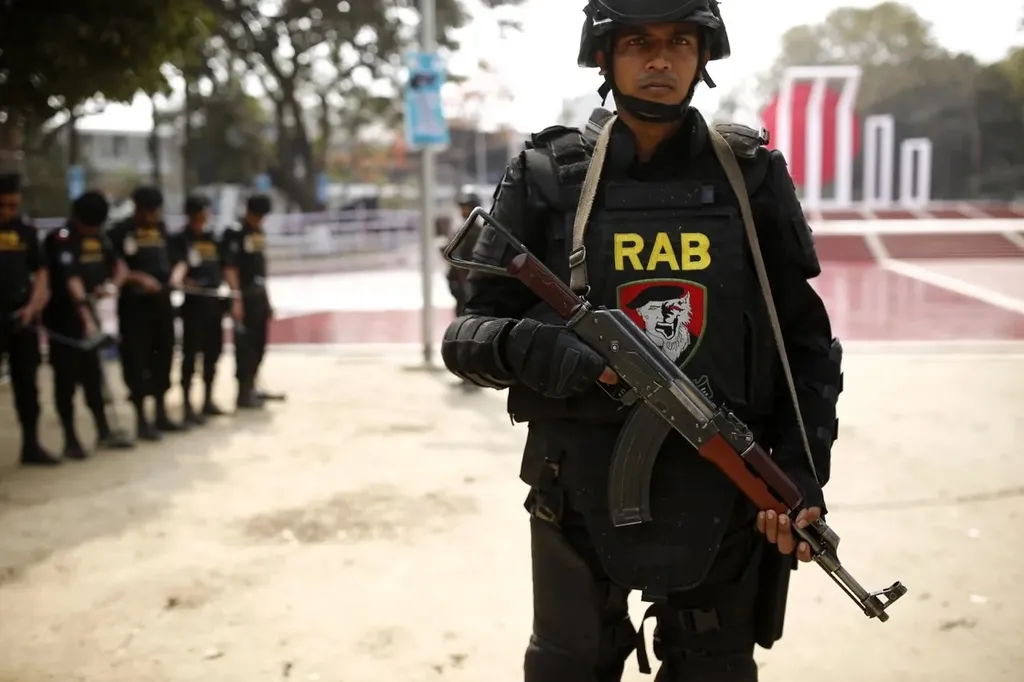
Bangladesh's Rapid Action Battalion (RAB) has faced criticism for its history of extrajudicial killings and human rights abuses. Despite attempts to rebrand the force, the underlying issues stem from its military origins and the state's philosophy that enabled its actions. The current government's approach to reforming RAB has been met with skepticism, as it fails to address the fundamental concerns regarding military involvement in civilian governance.
- ▪RAB was established in 2004 to combat violent crime and Islamist militancy in Bangladesh.
- ▪Under the Awami League government, RAB evolved into a tool for political repression, resulting in over 2,500 extrajudicial killings.
- ▪The U.S. imposed sanctions on RAB in December 2021, which led to a significant decrease in reported abuses.
Opening excerpt (first ~120 words) tap to expand
Bangladesh’s rulers have a habit of renaming institutions when they become politically radioactive. Roads are renamed after coups, and laws after public outrage. The practice is usually useless. Now, the same survival instinct is being applied to the Rapid Action Battalion (RAB), the paramilitary force that for two decades served as the preeminent enforcement arm of Bangladeshi authoritarianism. Officials insist a new legal framework and a fresh signboard can rehabilitate the force. They are wrong. The problem with RAB was never branding. It was the state philosophy that weaponized it. RAB emerged in 2004 under a Bangladesh Nationalist Party (BNP) coalition government led by Khaleda Zia.
…
Excerpt limited to ~120 words for fair-use compliance. The full article is at Asia Times.
Discussion
0 commentsMore from Asia Times