A Tiny Blue Deep-Sea Octopus Near the Galápagos Could Be a New Species
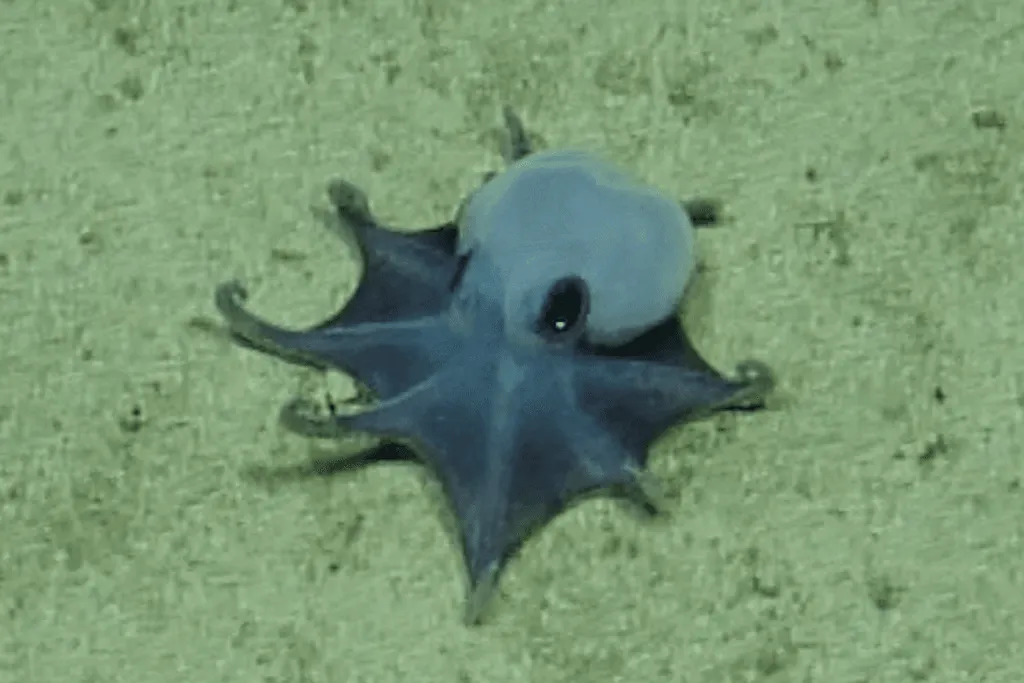
A tiny blue octopus discovered near the Galápagos may represent a new species named Microeledone galapagensis. Researchers were unable to dissect the single specimen collected, so they used CT scans to study its anatomy. This discovery highlights the vast unexplored regions of the deep ocean.
- ▪The octopus was found at a depth of 5,800 feet during a remote-operated vehicle expedition.
- ▪Researchers used non-destructive CT imaging to analyze the octopus without harming it.
- ▪This marks the first new octopus species described by expert Janet Voight in her four-decade career.
Opening excerpt (first ~120 words) tap to expand
Five thousand eight hundred feet beneath the surface of the Pacific Ocean, a tiny blue octopus suddenly drifted across a remotely operated vehicle’s (ROV) camera near an underwater mountain in the Galápagos. For a moment, the scientists watching the live feed sounded less like researchers and more like people spotting something impossible.“He’s tiny!” “It’s blue!”About the size of a golf ball, the little octopus stood out against the dark seafloor around it. The crew later used the ROV to collect the animal and bring it back to the surface. Back on land, researchers would realize they had just encountered a new species.The newly discovered octopus, Microeledone galapagensis, is now described in Zootaxa.
…
Excerpt limited to ~120 words for fair-use compliance. The full article is at Discover Magazine.
Discussion
0 commentsMore from Discover Magazine