950-year-old burial of a pet dingo is first clear archaeological evidence of humans ritually 'feeding' a grave anywhere in the world
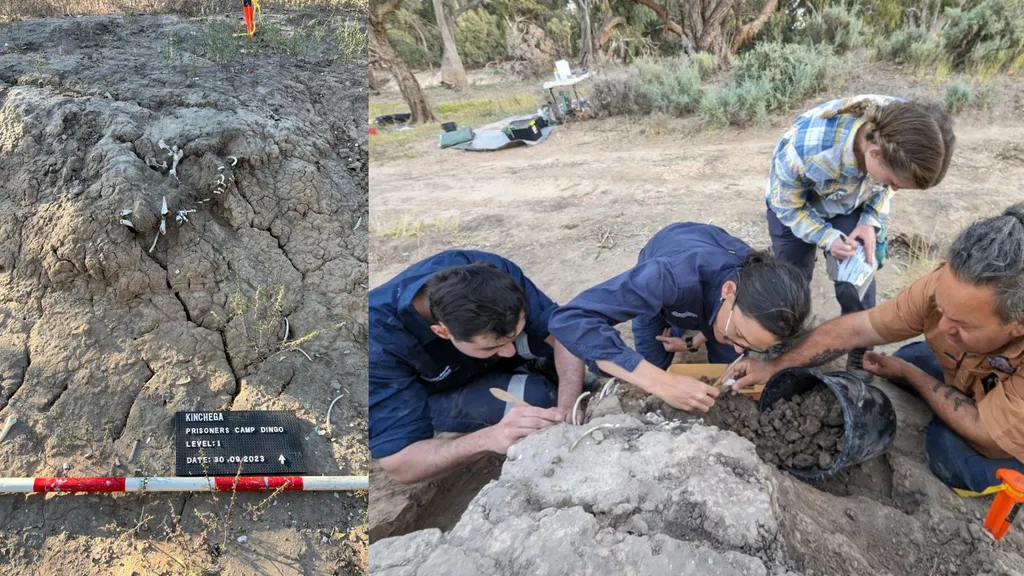
A recent archaeological study has revealed a 950-year-old burial of a dingo in Australia, providing the first clear evidence of humans ritually 'feeding' a grave. The burial, associated with the Barkindji people, included river mussels added over a span of 500 years. This practice highlights the deep cultural significance and care the Barkindji ancestors had for the dingo, reflecting similar rituals seen in various cultures worldwide.
- ▪The dingo burial is the first clear archaeological evidence of ritual feeding of a grave.
- ▪River mussels were added to the burial site for approximately 500 years after the dingo's interment.
- ▪The study involved collaboration with Barkindji Elders to understand the cultural significance of the burial practices.
Opening excerpt (first ~120 words) tap to expand
Archaeology 950-year-old burial of a pet dingo is first clear archaeological evidence of humans ritually 'feeding' a grave anywhere in the world Archaeologists have excavated the remains of a dingo that was buried by ancestors of the Australian Aboriginal Barkindji people and "fed" for the next 500 years with river mussels. By Sascha Pare published 18 May 2026 in News When you purchase through links on our site, we may earn an affiliate commission. Here’s how it works. A dingo burial in Australia contained river mussels that were added hundreds of years later in "feeding" rituals.
…
Excerpt limited to ~120 words for fair-use compliance. The full article is at Live Science.
Discussion
0 commentsMore from Live Science