8-year-old African American boy from Colonial Maryland found buried with white Colonists, and it's unclear if he was enslaved
The remains of an 8-year-old boy with predominantly African ancestry were found buried alongside colonial elites in a 17th-century cemetery in St. Mary's City, Maryland. He was buried in a gable-lidded coffin and born in America, based on isotopic analysis, but it remains unclear whether he was enslaved. The site also contained the remains of two indentured servants and prominent colonial figures, including two governors.
- ▪The boy died between 1667 and 1704 and had 25% to 30% European ancestry.
- ▪He was buried in a shroud within a gable-lidded coffin, a burial style indicating some level of respect.
- ▪Isotopic analysis of his skeleton indicates he was born in America, not Africa.
- ▪The cemetery also held the remains of Thomas Greene and Philip Calvert, two colonial governors of Maryland.
- ▪Genetic analysis of 49 individuals showed the Maryland colony was primarily founded by people of western English and Welsh ancestry.
Opening excerpt (first ~120 words) tap to expand
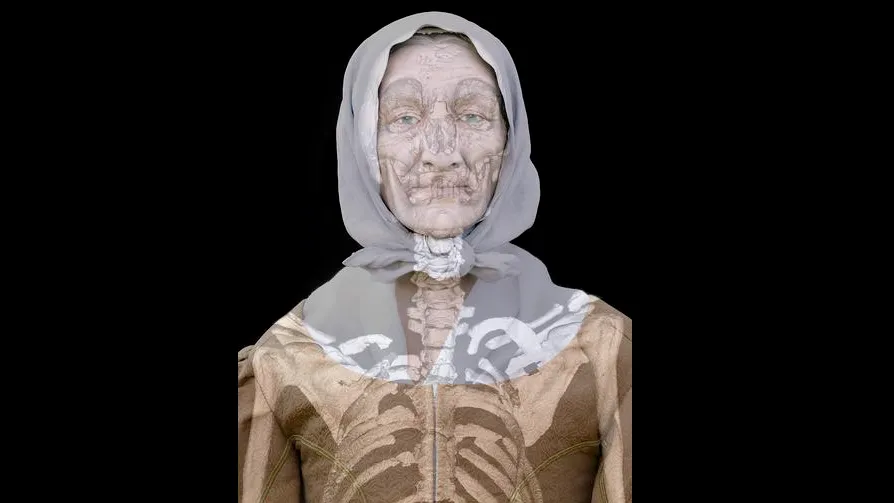
Archaeology The Americas 8-year-old African American boy from Colonial Maryland found buried with white Colonists, and it's unclear if he was enslaved A 17th-century cemetery from Colonial Maryland held the remains of an 8-year-old boy with majority African ancestry, as well as two indentured servants. By Kristina Killgrove published 16 May 2026 in News When you purchase through links on our site, we may earn an affiliate commission. Here’s how it works. Copy link Facebook X Reddit Pinterest Flipboard Share this article 0 Join the conversation Follow us Add us as a preferred source on Google Newsletter Subscribe to our newsletter A composite image of Anne Wolseley Calvert, whose skeletal remains excavated from a 17th-century cemetery have been superimposed onto an image of what she may…
Excerpt limited to ~120 words for fair-use compliance. The full article is at Live Science.
Discussion
0 commentsMore from Live Science