1,200-year-old giant 'death jar' in Laos contains generations of human skeletons
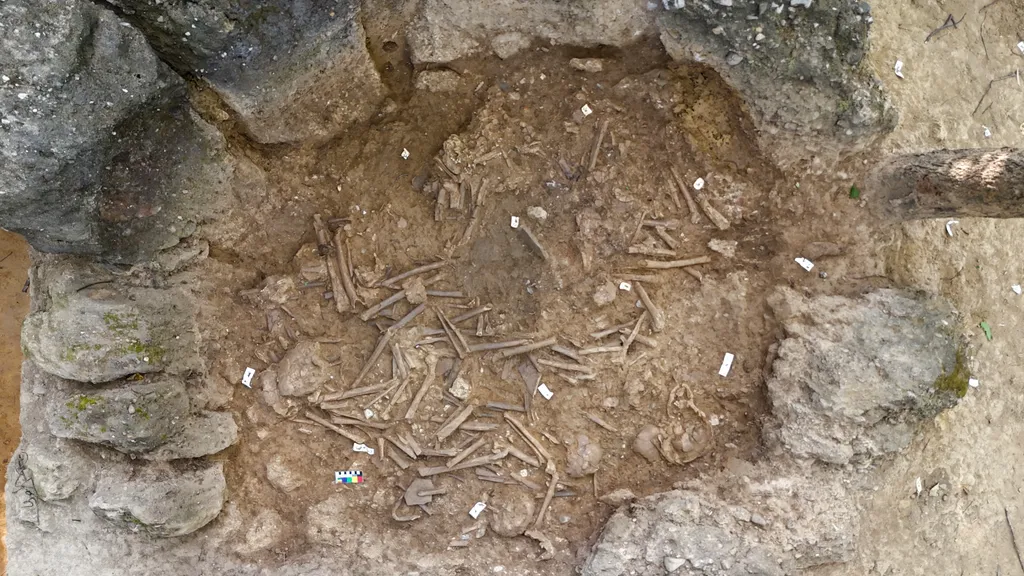
Archaeologists in Laos have excavated a 1,200-year-old 'death jar' containing the remains of multiple generations. This jar, known as Jar 1, is unique as it holds undisturbed human remains and may have been part of a complex mortuary process rather than a final burial site. The findings provide new insights into ancient burial practices in the region, with further research planned to explore the biological relationships of the individuals involved.
- ▪The 'death jar' was used to collect the remains of several generations of people around 1,200 years ago.
- ▪Jar 1 is the first known jar to contain undisturbed human remains, indicating its significance in ancient funerary traditions.
- ▪The excavation revealed that the jar was not the final burial site, as bones were arranged in specific ways, suggesting a complex mortuary process.
Opening excerpt (first ~120 words) tap to expand
Archaeology 1,200-year-old giant 'death jar' in Laos contains generations of human skeletons Excavation of a large stone vessel from the mysterious Laos Plain of Jars has confirmed its use in an ancient funerary tradition. By Kristina Killgrove published 18 May 2026 in News When you purchase through links on our site, we may earn an affiliate commission. Here’s how it works. A bird's-eye view of a "death jar" with human remains mid-excavation. (Image credit: Nicholas Skopal) Copy link Facebook X Reddit Pinterest Flipboard Share this article 0 Join the conversation Follow us Add us as a preferred source on Google Newsletter Subscribe to our newsletter Archaeologists excavating an unusual "death jar" in Laos have discovered that it was used to collect the partly decomposed remains of…
Excerpt limited to ~120 words for fair-use compliance. The full article is at Live Science.
Discussion
0 commentsMore from Live Science