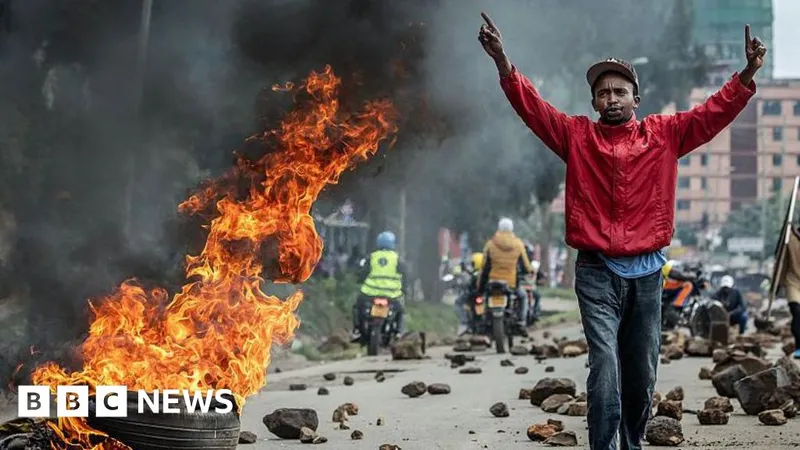
Kenya protesters block roads in public transport strike over fuel prices
AI bias-comparison
Protests have erupted in Nairobi, Kenya, as a nationwide public transport strike commenced in response to rising fuel prices. Demonstrators have blocked key roads and engaged in various forms of protest, including lighting bonfires. This event has led to significant disruptions in transportation and daily activities in the capital city.
Coverage diverges in the framing of the protests and their causes. ABC News emphasizes the public transport strike as a direct reaction to fuel prices, focusing on the protests' immediate impact. In contrast, the South China Morning Post highlights additional factors contributing to the unrest, including references to the Iran war and corruption, which are not mentioned by ABC or BBC. BBC News provides a more neutral account, detailing the strike's effects on transportation and schools without delving into the underlying causes.
No outlet has addressed the broader economic context, such as the historical trends in fuel pricing in Kenya or government responses to previous protests. This omission may reflect a blind spot, particularly for left-leaning sources that typically focus on immediate social issues without exploring deeper economic implications.
Headline framing
Headlines from various outlets cover a public transport strike in Kenya over fuel prices, with differing emphases on the actions of protesters and the strike's impact.
Coverage by perspective
Lean Left · 1 source

Center · 2 sources
Bias ratings: AllSides Media Bias Chart + Ad Fontes + MBFC consensus. AI comparison: Cerebras Llama 3.3-70B with light editorial prompt. No paywall, no tracking, reader-funded — support →